Crawlspace pest exclusion is the deliberate fortification of a home's structural perimeter below the finished subfloor. In Middle Georgia, homes constructed on crawlspace foundations face sustained biological pressures…
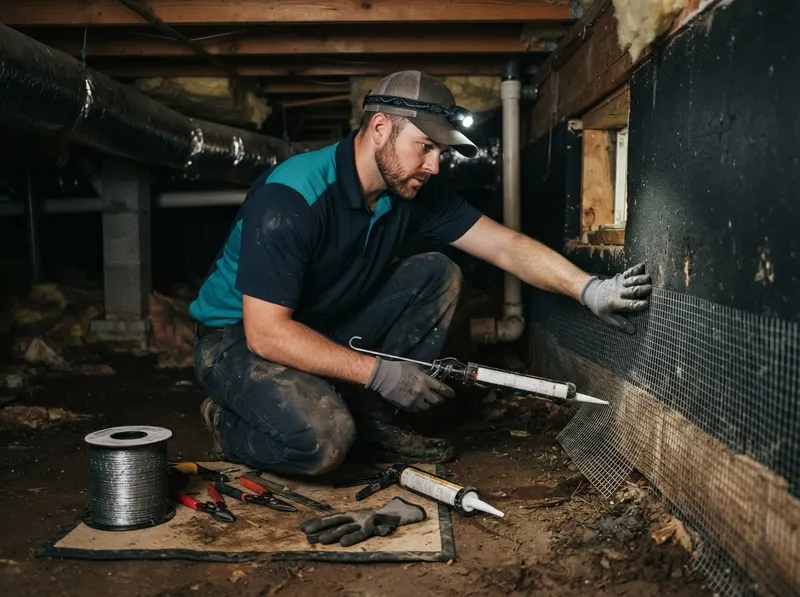
Crawlspace pest exclusion is the deliberate fortification of a home's structural perimeter below the finished subfloor. In Middle Georgia, homes constructed on crawlspace foundations face sustained biological pressures from subterranean pests. Red clay subfloors retain deep soil moisture, generating elevated humidity gradients that draw German cockroaches, roof rats, mice, and subterranean termites inward. Rather than relying solely on repetitive chemical broadcast spraying, physical exclusion physically denies pests entry to sill plates, plumbing chasms, and floor joists. Homes in historic districts such as Vineville, Intown, and Ingleside frequently sit on open-pier or vented brick foundations built prior to modern rodent-proofing standards. These structures feature irregular masonry vents, decayed wood framing, and settling gaps through which pests migrate directly into living spaces above.
Selecting crawlspace pest exclusion over chemical-only treatments is an operational decision based on the longevity of the protection. Surface sprays degrade within 30 to 90 days under the humid, shaded conditions typical of Northwoods, Suburban Woods, and Shirley Hills yards. In contrast, heavy-gauge galvanized 1/4-inch hardware cloth, cured hydraulic cement, and architectural-grade metal flashing provide mechanical barriers that pests cannot chew or bypass. The operational trade-off requires upfront perimeter labor and crawlspace entry clearance: workers must access tight, low-clearance areas across the foundation footprint, and any existing rotted framing or broken ground vents must be mechanically addressed rather than simply fogged. ShieldPoint Pest Control uses this engineering-focused perimeter exclusion model specifically tailored to Middle Georgia clay beds.
Properties bordering natural drainage basins, Lake Tobesofkee, or the Ocmulgee Mounds National Historical Park face regular pressure from burrowing field rodents and dampwood pests. When ground water tables rise during seasonal rains, organisms abandon saturated topsoil and seek refuge within dry foundation voids. In neighborhoods like Cherokee Heights, Bellevue, and East Macon, sealing ground-level plumbing drops, wiring sleeves, and access hatches stops pests before they breach wall cavities. ShieldPoint Pest Control applies this mechanical protection without locked long-term monthly subscriptions. Every crawlspace perimeter requires a definitive on-site assessment to establish baseline moisture levels, verify physical access clearance, and determine the exact linear footage of foundation penetrations requiring structural fortification.
Every job gets a firm, written price after a free on-site visit.
Tell us about your crawlspace pest exclusion job in Macon and we'll send a clear, written quote, usually the same day.
 ShieldPoint Pest Control