Bed bug remediation requires clinical perimeter containment rather than surface aerosol spraying. Over-the-counter pyrethroid foggers frequently fail due to documented insect resistance and instead drive bed bug…
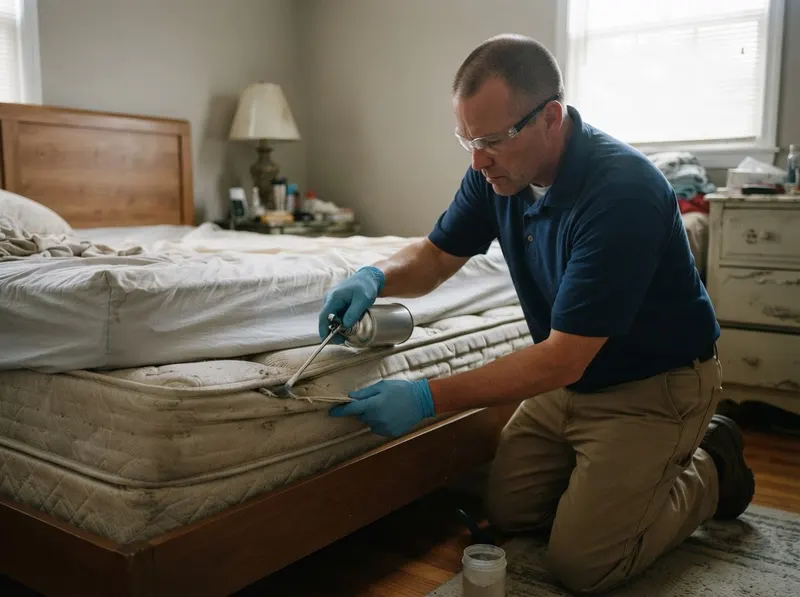
Bed bug remediation requires clinical perimeter containment rather than surface aerosol spraying. Over-the-counter pyrethroid foggers frequently fail due to documented insect resistance and instead drive bed bug aggregations deeper into interior wall assemblies. In Macon, structural variables directly dictate remediation strategy. Historic homes with heart-pine subfloors and lath-and-plaster construction, such as those found throughout the Vineville Historic District and Intown Historic District, contain extensive intra-wall travel corridors that harbor dormant nymphs. Conversely, modern slab-on-grade foundations common to Suburban Woods and Northwoods present primary harborage along carpet tack strips and baseboard expansions. The technical protocol balances high-output localized heat application reaching 122°F to 135°F, which causes irreversible protein coagulation in insect eggs within 90 minutes, paired with long-residual microencapsulated compounds that neutralize migrating adults.
Decision guidance depends strictly on the infestation index and architectural density. If bed bug activity is limited to a single framed box spring and localized headboard, an intensive dual-treatment non-repellent residual barrier fits the budget parameters while halting colonization. If physical activity extends into hollow trim, electrical switchplates, or adjoining rooms across a multi-story layout in Shirley Hills or Ingleside, full-structure heat remediation combined with void dust injection becomes necessary. The operational trade-off involves preparation rigor versus structural disruption: chemical barrier protocols require multiple precision visits over a 21-day gestation cycle but minimal resident relocation, whereas thermal saturation neutralizes eggs and adults in a single 8-hour operational window but requires sensitive electronics, plastics, and medical supplies to be protected or removed.
ShieldPoint Pest Control structures every treatment around structural perimeter defense rather than endless recurring contracts. In Bellevue, East Macon, and Cherokee Heights, homes frequently sit above humid, vented crawlspaces where relative humidity exceeds 70%, creating microclimates that prolong pest resilience along lower floorplates. Technicians execute localized applications calibrated for high-humidity conditions to prevent compound degradation. All active materials utilize pet-friendly protocols once fully dried, maintaining indoor environmental air quality. Direct telephone scheduling at (478) 478-1641 connects property owners directly to remediation logistics.
Every job gets a firm, written price after a free on-site visit.
Tell us about your bed bug remediation job in Macon and we'll send a clear, written quote, usually the same day.
 ShieldPoint Pest Control